Welcome to FDA Matters
In the early morning hours of January 13, STAT broke the story of Dr. Pazdur’s remarks at the JP Morgan conference. Read the entire story here. The full video is here.
Pazdur speaks, people listen. And they should. The headline gives you the gist: “Pazdur warns that politics, ‘chaos’ are damaging FDA.”
My latest column was sitting on an editor’s desk. I have published it in full below. It anticipates what Dr. Pazdur said....and it provides a larger context for the concerns every FDA stakeholder should have.
It concludes:
It will be difficult to persuade the White House, HHS, and FDA to preserve FDA as a meaningful agency capable of sustaining its prior level of success and value. Even still, the effort must be made because the stakes are so high.
FDA at a Crossroads in 2026 – The Threat of CDC-ification
Along with most of the federal government, FDA has undergone massive changes since January 2025….
We need government food policies that are understandable, sensible, feasible, flexible, actionable, and beneficial.
Against that standard, the new 2026-2030 Dietary Guidelines for Americans (DGAs), released January 7, 2026 (here), are not particularly useful. Many of the findings are unclear and probably not actionable, the message is garbled, and the inverted food pyramid is inexplicable.
Worst of all, the DGA’s are not responsive to the most important realities of hunger in America....
Here are some highlights from my 2025 FDA Matters columns that seem particularly pertinent as we begin a new year. More details on each topic are contained in the full column.
FDA’s Credibility Is Tied to Its Reputation for Science-Based Decisionmaking
“Science is a discipline. As such, it has rules that must be followed for policy and regulatory decisions to be meaningful, actionable, and effective. Data may be subject to interpretation and conclusions can vary, but the fundamentals of scientific thinking are always applicable.”
Critical Loss of Manpower and Expertise Can Be Partially Offset By The Growing Role of AI in Regulatory Science
“AI can help bridge some--certainly not all--of the gap created by the loss of expert staff at the FDA. However, this is speculative, not proven...and the progress to date is likely real but almost certainly oversold.”
Inspection and Compliance: Harder and More Important Than Stakeholders, Congress, and the Media Realize
“Probably the single most essential service of FDA is its inspections and compliance work….Going back to the late 1800’s (the “Gilded Age” and pre-FDA), we know what happens if you do not regulate food and drugs.”
This week’s FDA Matters column, entitled “The Midterms Are Coming. Vaccines May Play a Role” is coauthored with Dr. Michael Miller and can be found here. It is a “call to action” to ensure that candidates understand that opposition to vaccines is harmful to their community.
In the winter months ahead, we expect ongoing outbreaks of vaccine-preventable diseases. That is likely to stimulate public and media attention to the preventable morbidity and mortality associated with measles, whooping cough, influenza, respiratory syncytial virus, and other contagious illnesses. Some communities will be hard-hit economically because of worker absences due to personal and family illness.
Ordinarily, public health concerns don't have the immediacy or salience to affect elections. However, the state-to-state spread of this year's record measles outbreaks offer irrefutable evidence that anti-vaccine policies are not just a geographically isolated concern or a mistake with far-off consequences.
We believe vaccine policies will have concrete health and economic consequences in the short term, sufficient to make them a potential election issue in the 2026 midterms.
To understand why, please read our column at here. Other recent FDA Matters columns can be found at: https://www.fdamatters.com.
One of FDA Matters’ recurring themes is the importance of FDA inspections and enforcement activities. Today’s column (“Me, FDA, and Maybe the Mafia”) focuses on a personal story and is dedicated to the brave inspectors and investigators who never know what they will find or who they will be dealing with during an inspection or criminal enforcement.
The story reflects FDA’s history as a struggle of competing interests. Sometimes reasonable people disagree. At other times, it is obvious that indifference or greed are the driving forces.
After all of these years, I still can’t say for sure whether my story involved reasonable people or dark forces.
My first recollection of the artificial sweetener, saccharin (distributed under the brand name “Sweet‘N Low”) was a 1977 visit to the House health subcommittee’s staff office. It was overflowing with boxes that contained letters begging Congress to prevent FDA from removing saccharin from the marketplace.
Latest Article:
FDA MATTERS HAS BEEN FEATURED IN:
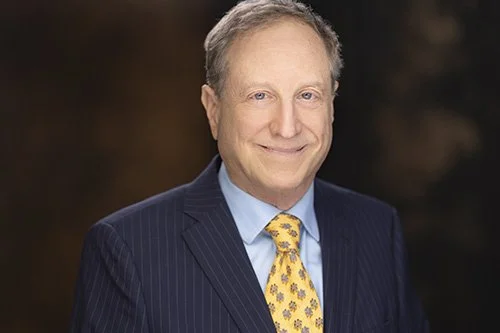
Steven A. Grossman, JD, is the founder and author of FDA Matters. Read more about Steven here.
FDA Matters provides short-form analysis of FDA policy and regulatory issues. We know you are busy, so we publish 1 to 2 columns per week, each a 3-5 minute read.
FDA Matters does not report the news....we provide analysis of what's behind the news.
FDA Matters advocates for a more effective, efficient, and fair FDA.